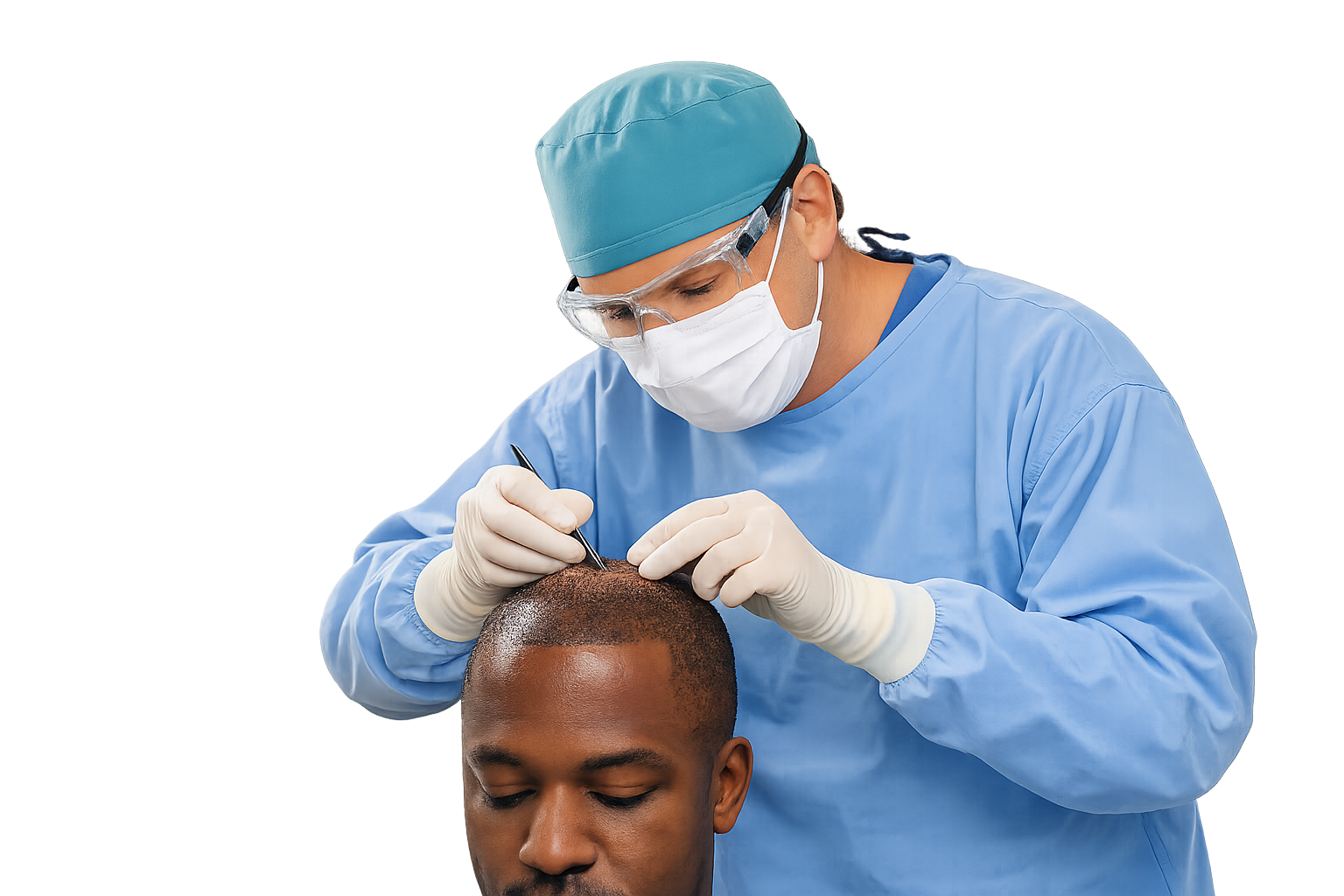
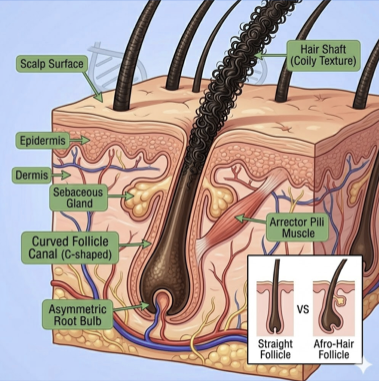
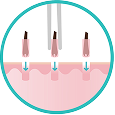
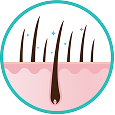
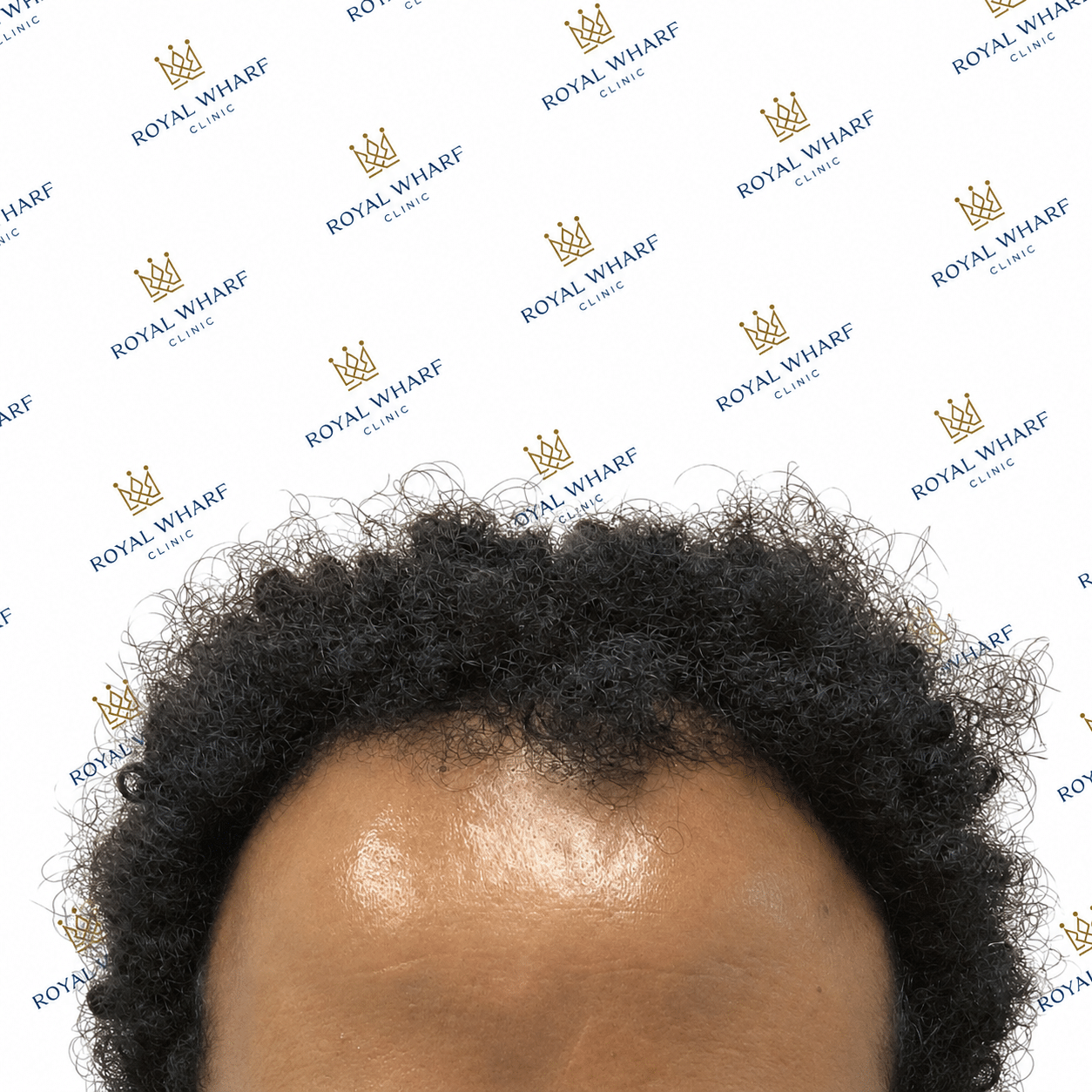
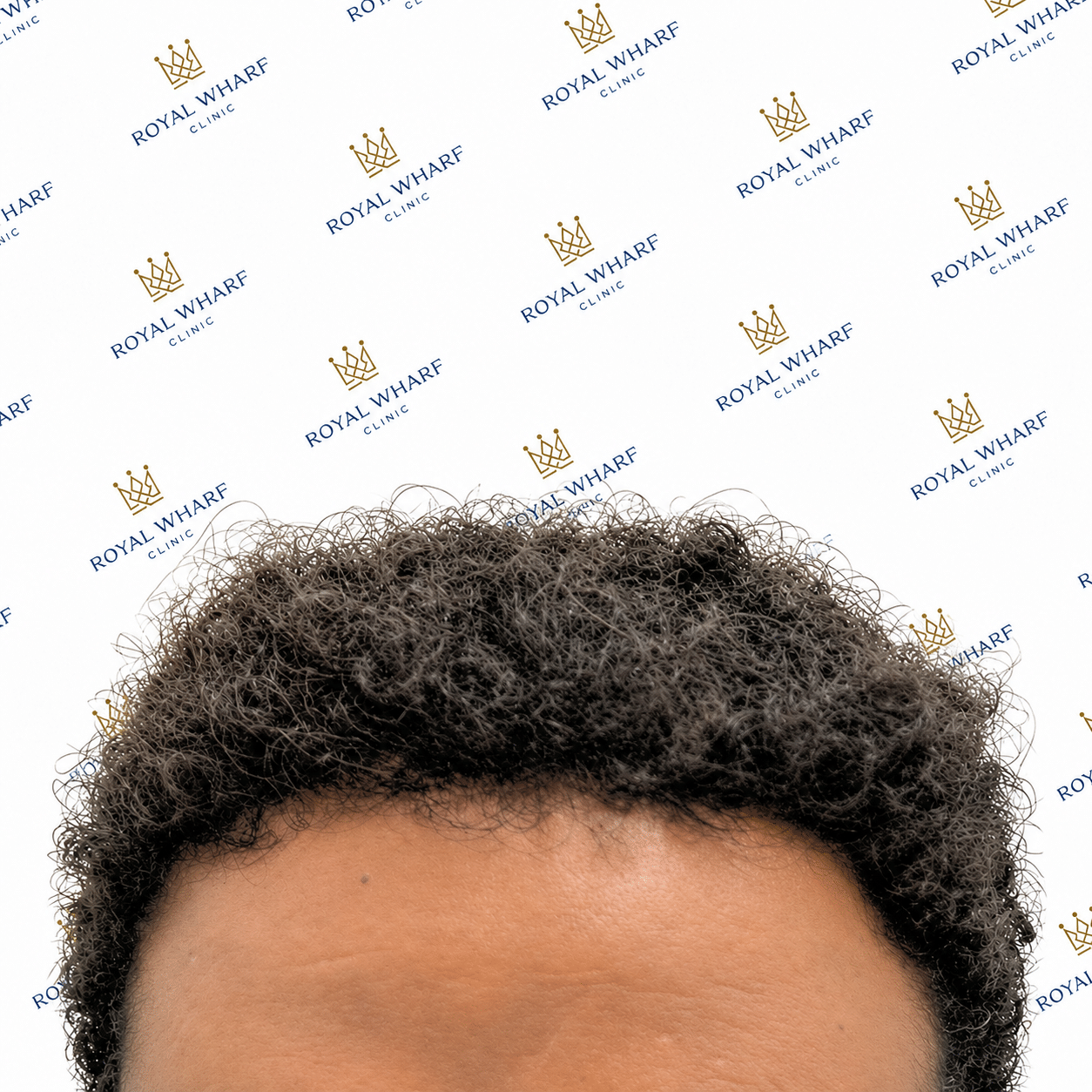
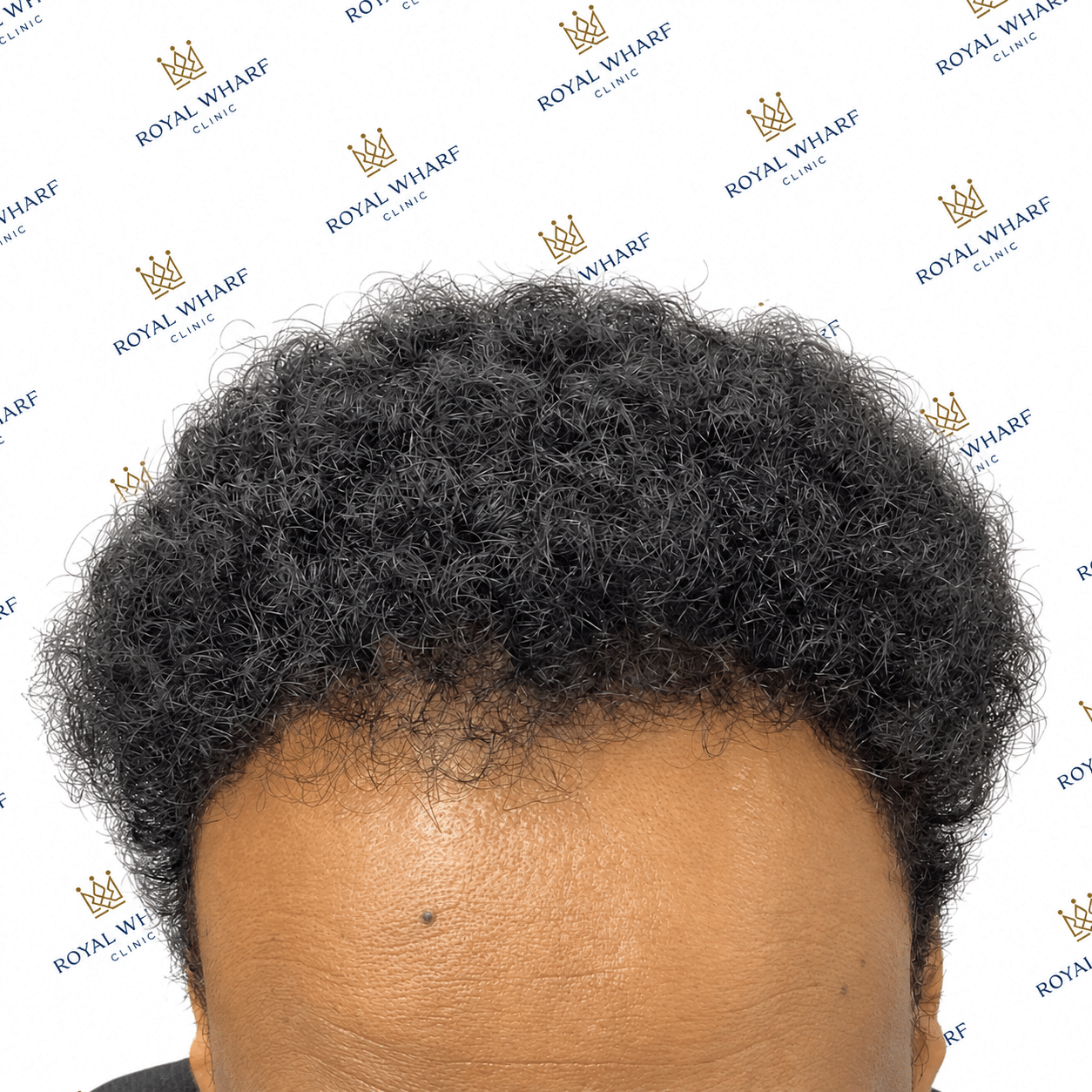
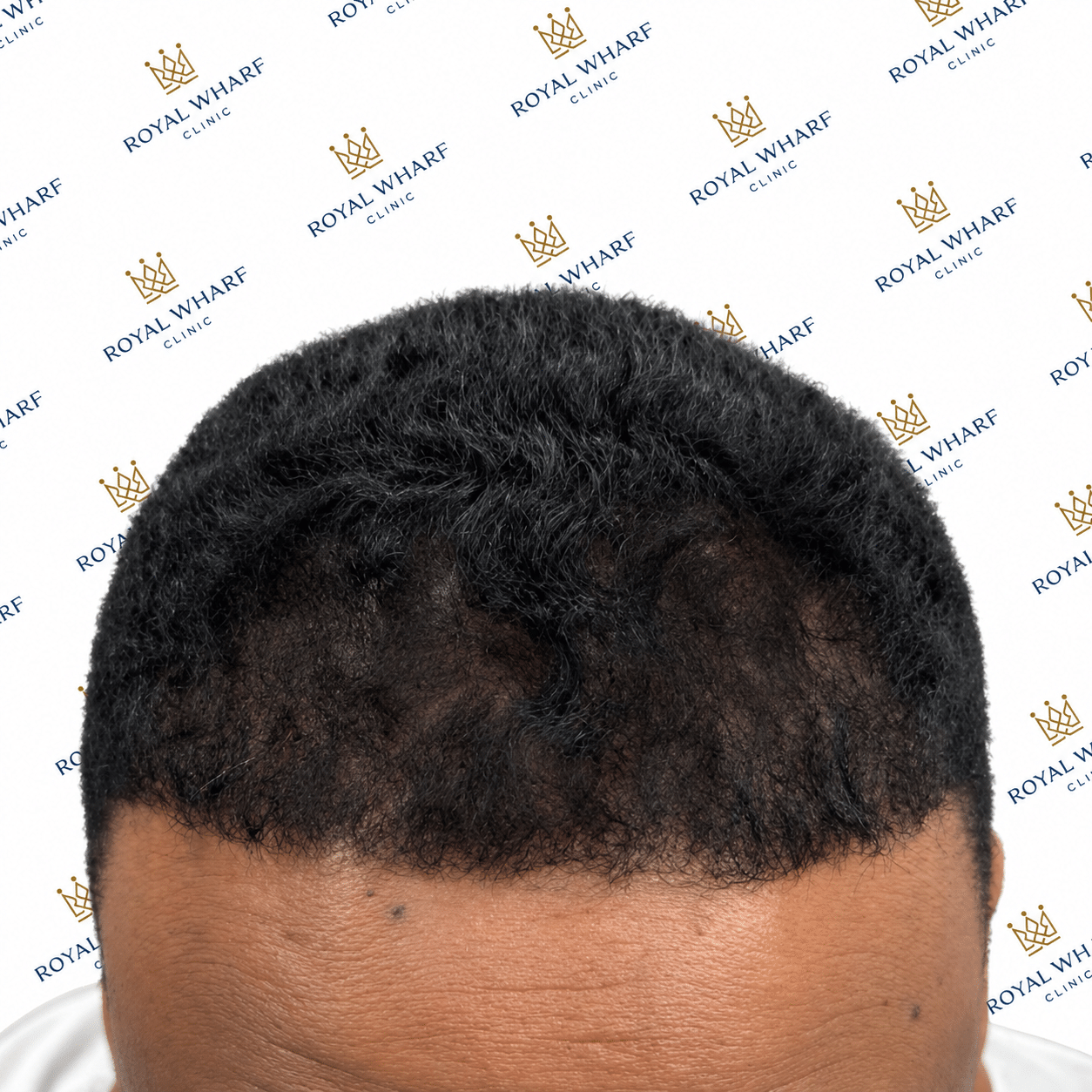
An Afro Hair Transplant is a specialised form of FUE (Follicular Unit Extraction) that is designed specifically for tightly curled, textured, or Afro-Caribbean hair types. It differs from standard FUE due to Afro-textured hair follicles growing in a spiral or helical shape underneath the scalp, whereas non-Afro hair follicles are straight.
This makes extracting the follicles a more intricate process, requiring a surgeon with specialist surgical experience and tools to avoid damaging the follicles during extraction.
At Royal Wharf Clinic, we believe in the importance of making hair transplants accessible for everyone, regardless of their hair type. This is why our surgical team has many years of combined experience in Afro hair transplants.Our prices start from £3,600 inc. VAT – get in touch now to find out how we can help you!
Expert Care Backed by Real Results
At Royal Wharf Clinic, our Afro hair restoration treatments are supported by our team’s many years of experience and medical knowledge.
Our staff are dedicated to providing an exceptional patient experience and aim for excellent results for every patient. Results vary from person to person.
Afro Hair Transplant Specialists
99% Surgical Success Rate*
5000+ Hair Procedures Performed*
CQC-Registered London Clinic
*Figures reflect the combined career experience of our clinical team.
Afro Hair Transplant Specialists
Afro Hair Transplant Specialists
99% Surgical Success Rate*
99% Success Rate
5000+ Hair Procedures Performed*
5000+ Procedures Performed
CQC-Registered Clinic in London
CQC-Registered London Clinic
Why Afro Hair Requires a Specialised Surgical Technique
In comparison to standard FUE, Afro hair poses a unique set of challenges that require a specialist surgical technique, and a surgeon with plenty of experience in this area. For most hair types, follicles beneath the scalp tend to grow in a relatively straight or gently curved path, making extraction more predictable. In Afro-textured hair, follicles usually grow in a curved, spiral, or helical pattern beneath the skin.
This unique structure makes extraction technically more challenging, as the surgeon must carefully follow the follicle’s natural curve. If the angle or depth is incorrect, there is a higher risk of follicle damage during extraction or implantation.
This means that during the implantation process, your surgeon will need to place the follicles at a very precise angle to avoid transection. This requires a lot of skill, experience and often more time than a standard FUE procedure.
At Royal Wharf Clinic, our hair restoration experts have extensive experience working with Afro hair, as a part of our mission to make hair restoration accessible to all who want it, aiming for long-lasting, natural results for every patient.
Hair Growth Timeline
The hair growth timeline following an Afro FUE transplant can differ from person to person, but the progression is relatively linear. Below is a guideline of what the hair growth process can look like following your transplant procedure.
Day 1-2 | Initial Healing
The treated area will be swollen, and you will notice redness and scabs beginning to form.
Week 1-2 | Stabilisation
The area will likely become itchy around week 1, however the scabs will typically begin to fall off in the second week.
Months 1-2 | Shedding
Transplanted hair may begin to shed, allowing for new growth. Peak shedding may occur in week 2 (sometimes even longer) – this is referred to as ‘shock loss’ and is completely normal.
Months 3-4 | Early Growth
Initial, early stages of new hair growth typically begin to show, and your natural curl pattern gradually begins to show signs of returning.
Months 6-9 | Visible Change
Your hair typically begins to fill out in thickness and density.
Months 12-18 | Final Results
By Month 12, most patients see a natural, long-lasting appearance and results are usually stable. Results vary from person to person. From this point forward, your transplanted hair will continue to grow at the same rate as the rest of the hair on your head. Subtle refinements in density and texture may continue through Month 18 for the absolute final mature outcome.
What Happens on Surgery Day
Arrival & Check-In
You’ll be greeted and guided to a private surgical suite. Your surgeon will review your treatment plan and answer any final questions. You will also need to sign consent forms.
Photography & Hairline Design
We’ll take before-photos for medical documentation. Your surgeon will mark and confirm the final hairline and/or transplant zones.
Anaesthetic
A local anaesthetic is administered to help keep you comfortable throughout the procedure. You’ll remain awake and alert, with breaks provided as needed.
Extraction
Using the FUE technique, individual hair grafts are carefully extracted from the donor area at the back or sides of your head.
Graft Preparation
Once extracted, the grafts are meticulously sorted into singles, doubles, triples, and quadruples, then carefully prepared and preserved for implantation.
Incision Creation
Tiny incisions are created in the recipient area by the surgeon with precise control over angle, depth and density to match your natural hair growth pattern.
Lunch Break
We’ll offer you a curated meal from Halal, Vegan or Chicken options along with caffeine-free refreshments
Implantation
Your extracted grafts are implanted one by one into the recipient zones. This step takes time and precision, every graft matters.
Aftercare and Recovery Pack
Once the procedure is complete, your scalp will be cleaned and we’ll provide your aftercare kit with medications, washing instructions, snacks and contact details.
Discharge and Support
After your treatment, you’ll have access to our team should you have questions or concerns post-op, plus an emergency line for urgent concerns.
What Your Afro Hair Transplant Package Includes
Your Afro hair transplant will be performed by one of our experienced surgeons, using specialist tools and techniques adapted specifically for curved spiral follicles. This is designed to minimise trauma to the scalp and give natural textured results.
Your Afro Package
Car drop-off service on the day of your surgery
Complete Afro FUE hair transplant procedure
Complimentary meals, drinks, and comfort breaks
Full aftercare kit with medical-grade products
12-month follow-up programme
Dedicated patient advisor available throughout your journey
Clinical & Surgical Inclusions
Surgeon-led hairline design tailored to your facial structure, age, ethnicity, and long-term hair goals.
Senior technicians involved in graft extraction and implantation, each with extensive surgical experience
Graft separation and preservation protocol to maintain graft integrity
Sapphire-blade micro-incision technology for refined channels and natural density
Local anaesthesia administered by the surgeon to help keep you comfortable
Density planning and graft mapping based on donor capacity and personal goals
Comfort, Monitoring and Support
Meals, beverages, and scheduled comfort breaks
Before-and-after photography
Post-op washing and review appointments
Direct access to an emergency support line if required
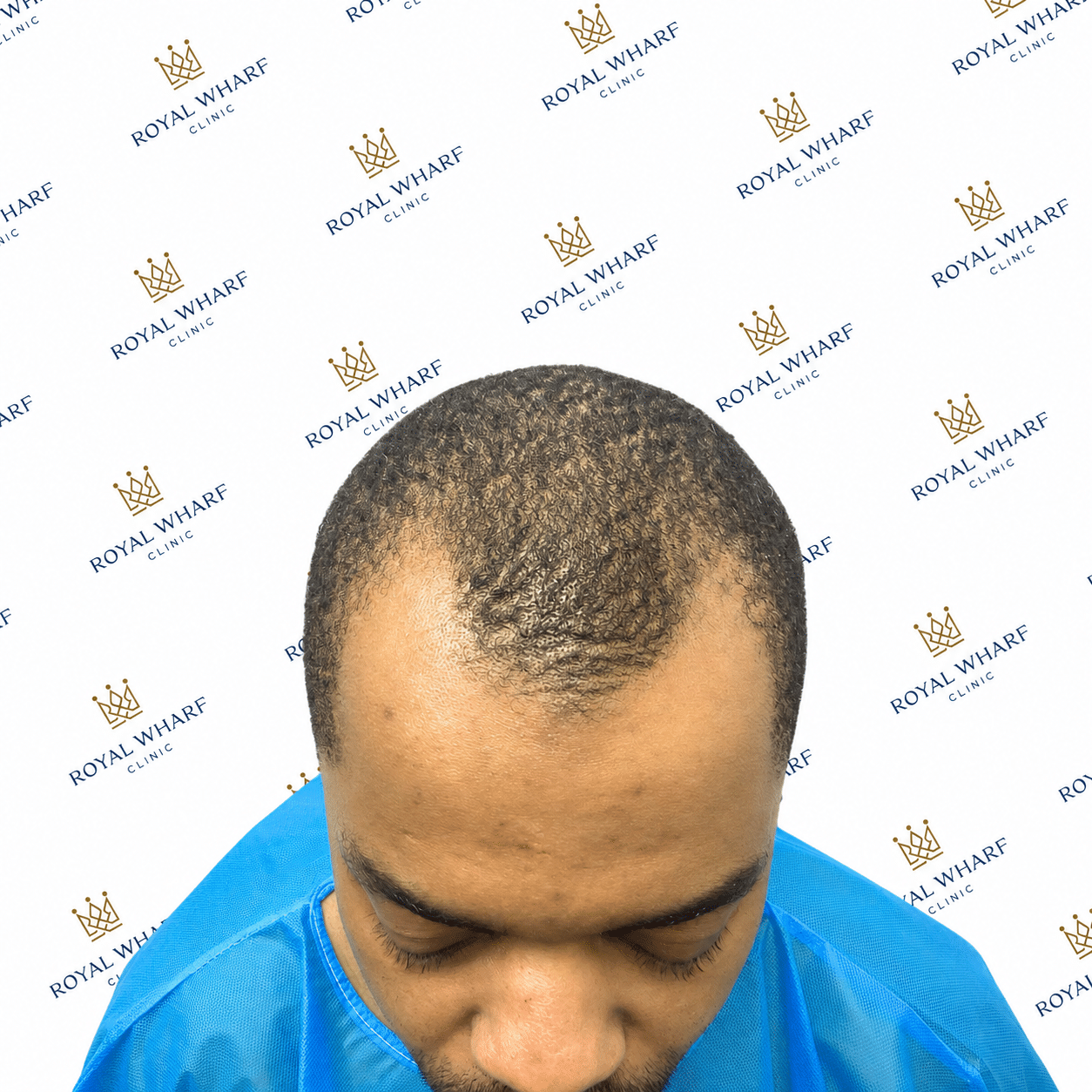
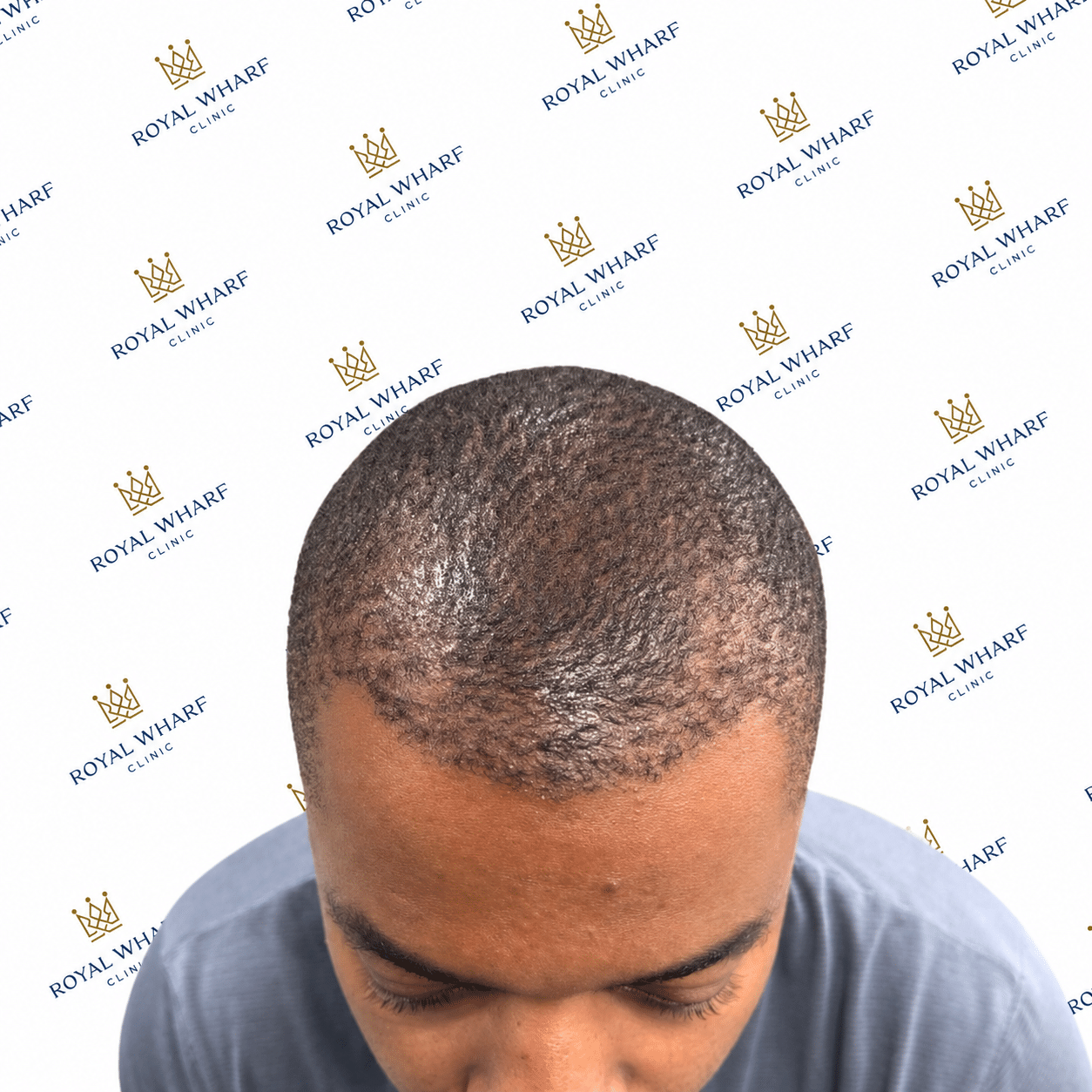
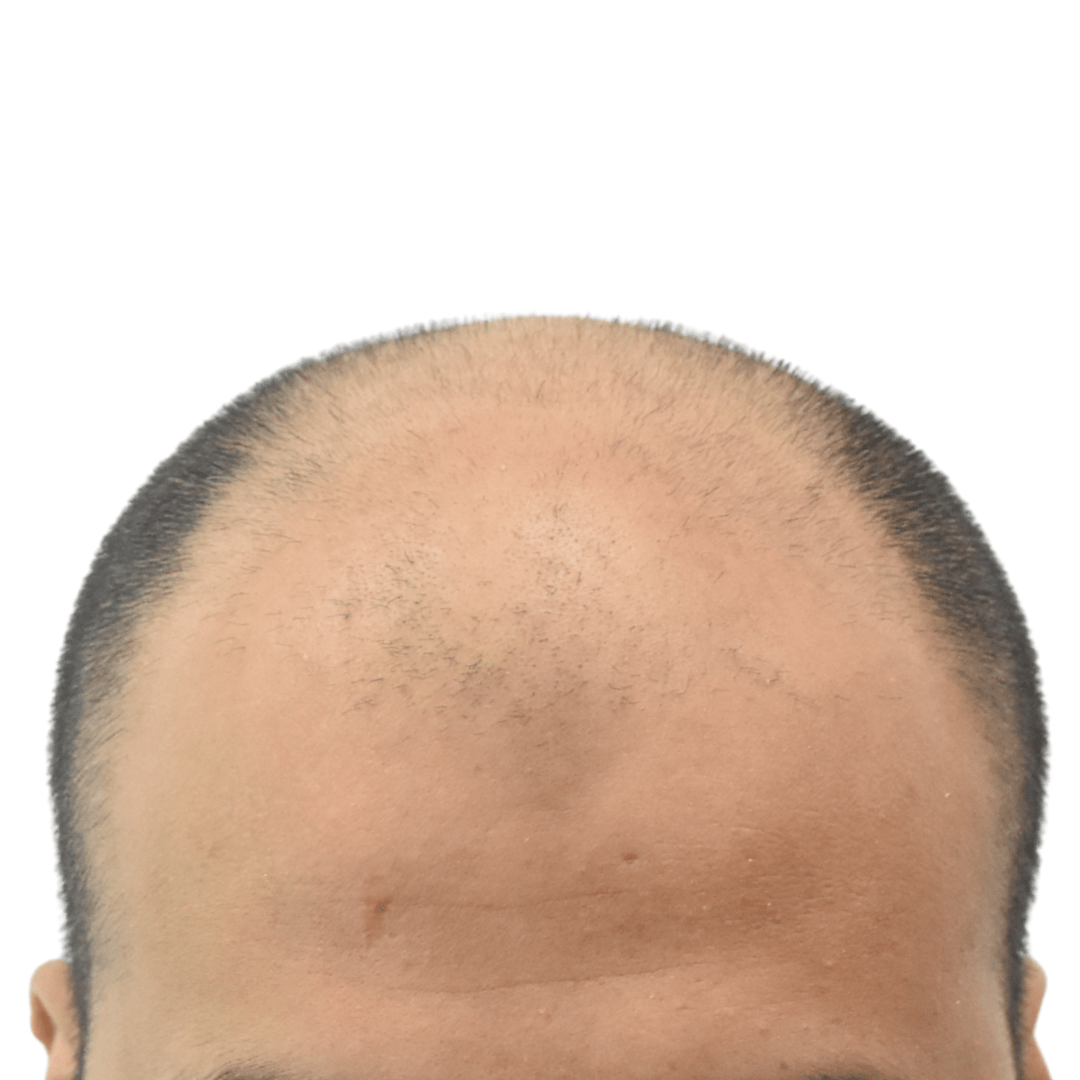
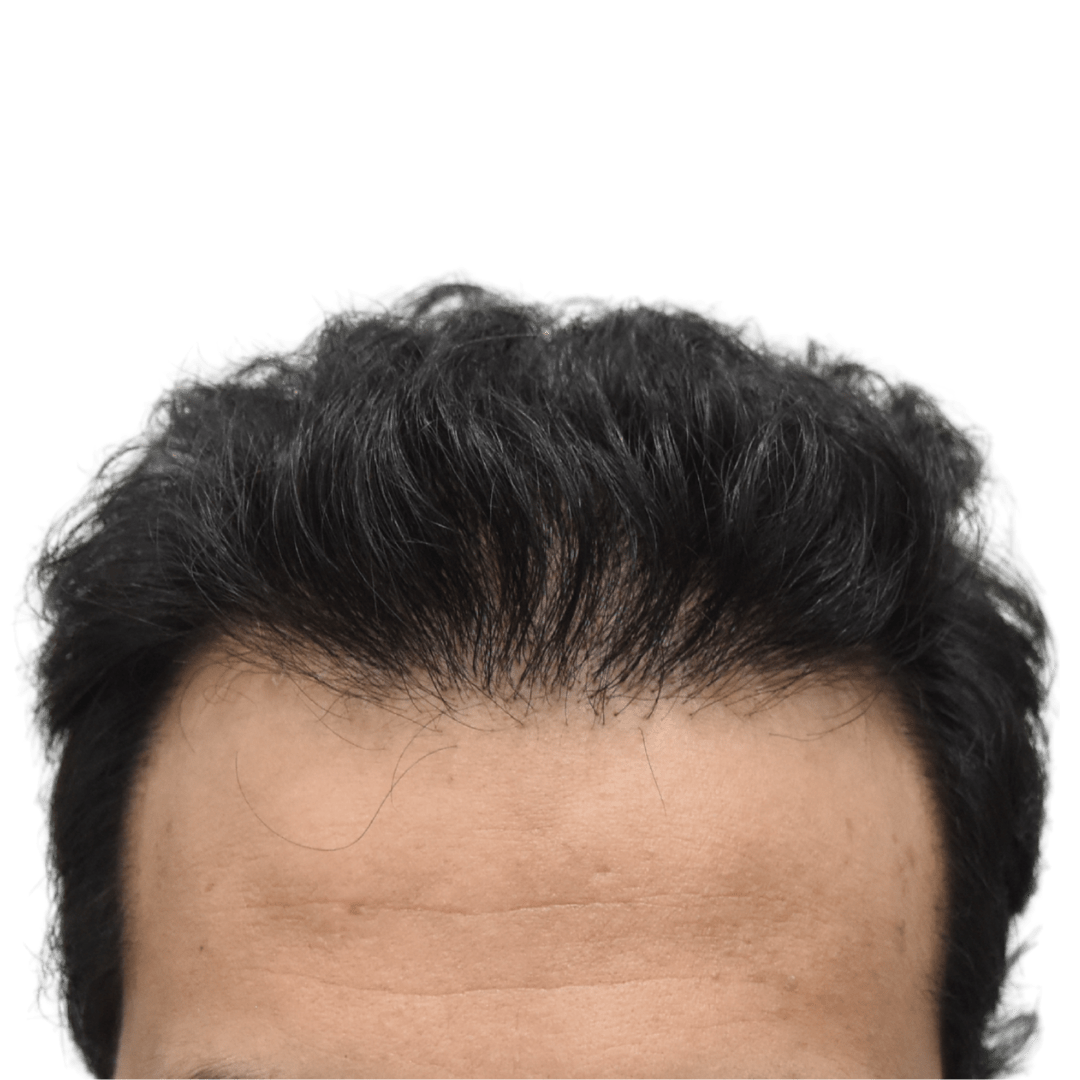
Here at Royal Wharf Clinic, we know that actions speak louder than words. Our long-lasting hair restoration results are natural in appearance and expertly performed. Results vary from person to person.
This gallery shows our patients’ hair before their hair restoration begins, and after their procedure, side-by-side. Each patient has an individual treatment plan tailored to their specific wants and needs, and as such, this gallery showcases the wide variety of hair restoration transformations we offer.
At Royal Wharf Clinic, our expert clinicians use advanced techniques designed to make your Afro FUE hair transplant procedure safe and effective. Your care is personalised to your individual wants and needs, and tailored by our expert surgical team’s years of experience. Working together, we aim to provide natural hair restoration results. Results vary from person to person.
5,000+ Hair Procedures Performed* with a 99% Surgical Success Rate*
Natural, age-appropriate hairline artistry by our surgeons
Experts in Afro-textured hair with advanced FUE skills
Sapphire-blade FUE and modern transplant technology
Personalised, graft-based treatment plans
Dedicated patient advisor guiding you through your journey
Structured 12-month follow-up programme with four follow up check ins
Clear, transparent pricing with no hidden fees - Hair transplants start from £3,600 inc. VAT.
*Figures reflect the combined career experience of our clinical team.
Get Expert Advice Today
Begin your hair loss journey today, get in touch with one of our hair loss advisors
What Our Patients Think
Hear directly from the patients who’ve trusted us with their hair restoration journey. These real Google reviews reflect the care, expertise, and results we’re committed to delivering every day.
I had an excellent experience with Mr. Ani. He was very professional, responsive, and helpful throughout the entire process. His communication was clear and timely, and he went above and beyond to ensure everything was handled smoothly. I truly appreciate his support and would highly recommend his services to anyone. Thank you again for your great work!
Best regards,
Bilal Kakar
Berta Vidal has been absolutely amazing. She is incredibly helpful, attentive, and genuinely caring. Throughout my treatment she made sure I felt comfortable, supported, and well looked after. Her professionalism and kindness truly made a difference. Highly recommended.
Amazing experience from the very first consultation with Ani who could answer all my questions and was never once pushy like other clinics. Everyone I have dealt with has been extremely professional, knowledgeable and helpful. Dr. Shaan is brilliant at what he does and he is very passionate about it, he is also hands on in the procedure along with the technicians who were great.
The clinic pick you up or arrange an uber from your hotel anywhere in London and drop you back off after your procedure. They also provided me with lunch, an aftercare kit and a tracksuit which is a nice touch.
The clinic is very clean and modern and you are made to feel at home from the second you step foot inside, the staff also do everything they can to make you feel comfortable and relaxed through the whole process.
Before and after the procedure they are more than happy to answer any questions or queries you have and you have direct contact with them via WhatsApp.
I could’ve got a flight to Turkey in the same time I can drive to this clinic (5 hours) but I’m so glad I decided to stay in the UK and use RWC.
In a nutshell I would 100% recommend using Dr. Shaan and the medical staff at Royal Wharf Clinic. For the price you pay and the service you receive for a UK clinic it is worth every penny.
Excellent clinic
Dr Shaan is a great professional and an amazing surgeon over the moon with everything.. thank you for team and also better who did my prp today
Great experience from start to finish. The staff were professional and really looked after me during the procedure. They even provided good food on the day and booked me an Uber home afterwards, which was a thoughtful touch.
Response from the owner
1 year ago
Hi Ollie,
Thank you so much for your kind words! We’re delighted to hear that you had such a great experience with us from start to finish. Knowing you felt well cared for by the team throughout your procedure really means a lot.
We’re also so pleased you appreciated the little touches like the food and the Uber home, those details are important to us because we want every patient to feel completely supported and comfortable on the day.
Your feedback truly means the world, and we’re so grateful you chose us for your care.
Warm wishes,
The Royal Wharf Clinic Team
I was very impressed with the doc and the therapist. Really loved the microneedling and PRP for hair
Response from the owner
1 year ago
Hi Moitrayee,
Thank you so much for your kind words! We’re delighted to hear that you enjoyed your microneedling and PRP treatments and that both Dr. Shaan and the therapist left such a positive impression. These treatments can make a real difference, and it’s wonderful to know you felt happy and well cared for throughout.
We truly appreciate your feedback and look forward to welcoming you back for your next session!
Warm wishes,
The Royal Wharf Clinic Team
Could not fault the service the clinic provided. Watching the utube videos gave me the assurance I was looking for. On the day, all went well and the team made my experience as relaxing as possible. Even fell asleep during the procedure.
Response from the owner
1 year ago
Hi Roger,
Thank you so much for sharing your experience, it really means a lot to us. We’re so pleased to hear that the YouTube videos gave you the reassurance you needed before your procedure. We know how important it is to feel confident and comfortable before taking this step, and we’re glad they helped put your mind at ease.
It’s wonderful to hear that everything went smoothly on the day and that the team were able to make you feel so relaxed, even to the point of falling asleep during the procedure! That’s exactly the kind of calm and supportive environment we always aim to create.
We’re grateful you chose us and delighted to have been part of your journey. Thank you again for your trust and kind words.
Warmest wishes,
The Royal Wharf Clinic Team
Great service from the whole team, excellent from start to finish!!
Response from the owner
1 year ago
Hi Robert,
Thank you so much for your lovely feedback! We’re so happy to hear that you had such a positive experience with us from start to finish. The whole team works hard to make sure every patient feels supported and cared for, so your words truly mean a lot.
We’re grateful for your trust and look forward to welcoming you back anytime.
Warm wishes,
The Royal Wharf Clinic Team
Elite all round service. I began with a consultation which Dr Shaan provided very detailed information and took extra care in making sure I understood all options. No sales pitch, no pressure, just informed options.
Between consultation and surgery, Dr Shaan and his team were constantly available.
On the day the team took extra care in how they dealt with me. They took their time to insure the lining was correct, constantly checking up on me and created an all round welcoming environment. Considering the type of surgery, it's been a great experience.
Special shout out to Dr Shaan, Goldie, Phanindra, Mansi for being elite at what they do.
Update: Just came for my second PRP sesh. Berta who conducted the session can be added to the list of awesome staff
Response from the owner
1 year ago
Dear Abel
Thank you so much for sharing your experience with us. We’re delighted to hear that you felt well-informed, comfortable, and supported throughout your journey. Your kind words our team mean a lot, and we’re glad to know you felt cared for at every step. Wishing you the very best in your recovery and results.
I couldn’t be more pleased with Dr. Shaan and his team. Everyone was kind, accommodating, and helpful.
Shiva, who did a large portion of my treatment, was amazing. Everything in the procedure was well explained and well paced.
High quality clinic, great value, and would absolutely come back for future treatments.
Response from the owner
1 year ago
Hi Ethan,
Thank you so much for your thoughtful feedback, it truly means a lot to us. We’re delighted to hear that your experience with Dr. Shaan and the team left such a positive impression. Knowing you felt supported, accommodated, and well cared for is exactly what we strive for with every patient.
It’s wonderful to hear that Shiva made such a difference in your treatment. He takes great pride in making sure everything is clearly explained and carried out at a pace that feels right, so your kind words will mean a great deal to him.
We’re so glad you found the clinic to be high quality and of great value, that balance is something we always aim to deliver. Thank you for your trust and your kind recommendation. We’ll be here to welcome you back anytime you need us!
Warmest wishes,
The Royal Wharf Clinic Team
Had my procedure at the start of August and now out of the initial healing phase and can state Royal Wharf Clinic is probably the best clinic out there especially in the UK and if you are considering to go to Turkey. I have put off my procedure since June 2023 due to finding out negative reviews after paying deposits for a clinic in London and another in Turkey, so it’s not hyperbole when I state going with Royal Wharf and Dr Shaan is the best option when you want a best in class service.
The add value of transport to and from the clinic took hassle away on the day and serving a hot lunch was a nice touch. Further more the post op care has been outstanding as Dr Shaan is very responsive, it’s not a case of you get the procedure done and he leaves you in the wilderness and even that came with the added touch of medication which I already have a prescription for so saves me buying it for the next quarter. I have already recommended him to my personal network
Response from the owner
1 year ago
Dear Obinna,
Thank you so much for taking the time to share your detailed experience. We’re delighted to hear that you felt fully supported throughout your journey with us, from the initial consultation to the aftercare. At Royal Wharf Clinic, we aim to make every step as smooth and reassuring as possible, so it’s wonderful to know the transport service, lunch, and ongoing post-op support made a difference for you. Wishing you the best with your continued recovery and results.
From the moment I arrived at the clinic, every member of staff I encountered was incredibly warm and welcoming. Their friendly attitude immediately put me at ease. I’d like to give a special mention to Berta, who went above and beyond to make my visit as comfortable as possible. She consistently checked in to ensure I was feeling okay and did everything she could to help me feel relaxed throughout the entire experience. Her attentiveness and genuine care did not go unnoticed, and it truly made a difference.
Thanks to Berta and the entire team, my visit was not only pleasant but genuinely enjoyable. I’m already looking forward to my next appointment. Thank you all so much for your kindness and exceptional service.
Response from the owner
1 year ago
Dear Lenny,
We truly appreciate you taking the time to share your kind words and detailed experience with us. Your thoughtful feedback means a lot to the entire team. We're grateful you chose Royal Wharf Clinic.
Had an amazing experience here at royal wharf clinic. Dr Shaan was very patient informative and attentive. He was with me pretty much throughout the day. I can't recommend Dr Shaan and his surgical team highly enough. Thank you once again. Much appreciated 👍
Response from the owner
1 year ago
Dear Rashid,
Thank you so much for your kind words and for sharing your experience at Royal Wharf Clinic. We're delighted to hear that you had an amazing experience and felt well cared for throughout the day.
Your feedback means a lot to us and motivates us to continue delivering the highest level of care.
Today I went to the clinic with my mum we been coming to this clinic over one year now and my mum face changed completely she suffered from bad acne and now her safe it’s completely clear and I would like to thank Berta for the treatment she provided today she was very helpful professional and funny too 🥹❤️
Response from the owner
1 year ago
Dear Fatima,
Thank you so much for taking the time to share your experience. We're truly delighted to hear about the positive changes you've seen and appreciate your continued trust in our clinic. It's always our goal to provide professional, supportive, and friendly care, and we’re so glad to know you’ve felt that throughout your visits.
Berta made me feel at ease and during my treatment made sure I was completely comfortable throughout. She delivered an amazing service. The RW Clinic is such an amazing space for a variety of treatments. Friendly staff and a very clean environment. Highly recommended.
I had an incredible experience with Dr. Shaan and his amazing team.From start to finish, their care and professionalism were outstanding. Every step of the process was clearly explained. Dr. Shaan is truly skilled and compassionate, and the whole team. I couldn’t have asked for a better experience and fantastic job.
Highly recommended!🌟🌟🌟🌟🌟
---
So impressed! I only went in for an appointment but was fitted in for a cortisone injection there and then. All the staff were lovely and the doctor who treated me was very kind and patient answering all my questions. I never felt rushed at all. I would definitely go back and would highly recommend them.
Very professional service. staff are amazing and make sure you are relaxed and comfortable through our your procedure. Dr Mahmud communication is excellent and talks you through each stage of the treatment, explained the process, risk and realistic outcome... thoroughly recommended.
Top Service
Pick up and drop off
Very informative
A clear outlined plan
Not as painfull as I taught
Great after care guidance
Shaan Mahmood what a gentleman
He and his staff get my 2 thumbs up
And 5 stars
Excellent service for skin tag removal using cryotherapy. The doctor was highly informative, friendly, and professional, ensuring a smooth experience throughout the procedure. The clinic itself is lovely, creating a welcoming atmosphere. I highly recommend it.
Exceptional. From start to finish I couldn’t fault my experience here. From the simple booking process, to the warm welcome, and the treatment itself. Dr Shaan made me feel very comfortable and confident in the process, by sharing his professional expertise and knowledge, I felt like I was in safe hands. The clinic itself is really lovely. I would highly recommend. I’m so pleased I’ve discovered this clinic and I’ll be back.
Frequently Asked Questions
Find answers to the most common questions about getting an Afro FUE hair transplant at Royal Wharf Clinic, including treatment details, expected results, and aftercare guidance to help you make an informed decision.
Is an Afro hair transplant right for me?
If you are someone with Afro-texture hair who is dealing with hair thinning or a receding hairline, an Afro hair transplant could be a suitable option for you.If you have a viable donor area, you may be a suitable candidate (one of our surgeons can assess this during your initial consultation).
What type of hair loss can an Afro hair transplant treat?
An Afro hair transplant may be suitable for pattern baldness and a receding hairline. We also offer eyebrow and beard transplants to those with and without Afro hair.
What is better for Afro hair - FUE or FUT?
At Royal Wharf Clinic, we are firm proponents of the FUE hair transplant method. Being a more modern hair transplant method, it leaves minimal scarring, has a faster recovery period and is designed to give a natural, fuller look to the patient’s hair with improved density and thickness.
What is an Afro FUE hair transplant and how does it compare to FUT?
An Afro FUE hair transplant is a Follicular Unit Extraction (FUE) procedure specifically adapted for Afro-textured hair. Because Afro hair follicles have a naturally curved and coiled root structure beneath the scalp, the technique requires a surgeon with specialist experience to avoid damaging the follicle during extraction.
When performed by a skilled practitioner, Afro FUE can achieve results comparable to FUT (Follicular Unit Transplantation), without leaving a linear scar. The key to a successful outcome lies not just in the technique chosen, but in the surgeon’s expertise with Afro and curly hair types.
How many grafts will I need for my Afro hair transplant?
How many grafts you will need will be entirely dependent on the severity of your hair loss. During your initial consultation, one of our hair restoration specialists will be able to assess your hair loss, following this they will then devise a treatment plan, in which they will recommend a number of grafts based on the assessment.
Will my Afro hair transplant look natural?
When performed by a surgeon experienced in Afro FUE hair transplants, an Afro hair transplant is designed to look natural. Results vary from person to person.
Will my curl pattern remain intact after an Afro hair transplant?
Your curl pattern is determined by the hair follicle itself, which is the part that gets transplanted. Once the new hair begins to grow, it will typically follow the same curl pattern as the hair in your donor area.
Does an Afro hair transplant hurt?
Hair transplants are done under local anaesthetic, but some patients do report mild discomfort.
Will I be left with scarring after an Afro hair transplant?
FUE does leave tiny circular scars when harvesting the hair follicles from your donor area, however these are typically covered by the patient’s hair, and far less noticeable than the linear scar left by FUT (Follicular Unit Transplantation).
Are Afro hair transplant results long-lasting?
Afro hair transplant results are designed to be long-lasting, because the transplanted hair follicles are taken from areas of the scalp that are genetically resistant to hair loss (typically the back and sides of the head). Once transplanted, these follicles typically retain their resistance to hair loss and continue to grow in their new location for the long term.
However, it’s important to understand a key distinction:
The transplanted hair is long-lasting, however your existing, non-transplanted hair may continue to thin over time. For this reason, an Afro hair transplant is often combined with ongoing hair loss management, such as Medical Hair Loss Treatments (prescribed only where clinically appropriate, following a consultation with one of our doctors) or non-surgical treatments, to protect surrounding hair and maintain a natural, balanced result as you age.
At Royal Wharf Clinic, every transplant is planned with a long-term approach, considering future hair loss patterns, donor availability, and maintenance options so your results are designed to remain natural and sustainable for years to come.
Results vary depending on individual genetics, age, hair loss progression, and overall health. A consultation is essential to determine suitability and long-term expectations.
When will I see results after my Afro hair transplant?
New hair growth typically begins to show around months 3 – 4, being well underway by months 8 – 12. By 12 – 18 months, the results of your Afro hair transplant should be apparent.
How long will Afro hair transplant surgery take?
Afro FUE hair transplant surgery can take between 6 – 8 hours, but can take longer depending on how many grafts are required or the intricacy of the procedure.
What's the recovery process after an Afro hair transplant?
The recovery period from Afro FUE is typically faster and less uncomfortable than other hair transplant procedures. Typically, patients find they are able to return to work within 3-5 days.
However patients should expect some scabbing and itchiness in weeks 1 – 3, with new hair growth beginning to show around 3 – 4 months after their procedure.
How soon can I return to work?
Most patients find themselves able to return to work within 3 – 5 days, however this can vary from patient to patient.
Will I have to cut or shave my hair for an Afro transplant?
We will need to trim both your donor area and your recipient area before your procedure.
Will I need to take any medications before or after my Afro transplant?
RWC patients are given a 5-day course of antibiotics and pain relief after the procedure. Medical Hair Loss Treatments may also be recommended, prescribed only where clinically appropriate, following a consultation with one of our doctors.
Will I need more than one procedure as someone with Afro-textured hair?
Not always. Many patients achieve their desired result in one FUE procedure, but this depends on the extent of hair loss and donor availability, and will be discussed at consultation.
My Afro hair has been relaxed - can I still have a transplant?
In most cases, having relaxed Afro hair won’t prevent you from having an FUE hair transplant. The relaxer mainly affects the hair shaft, not the follicle underneath the skin, which is the part that is transplanted. Your suitability will be assessed at consultation.
Are there any side effects specific to Afro hair transplants?
Afro hair transplants are generally safe when they are performed by a surgeon who is experienced in Afro-texture, but there are a few side effects that should be taken into consideration. One of the main concerns from patients is keloid scarring. People of African or Caribbean descent tend to be more prone to keloids, which are raised scars that grow beyond the original incision.
While keloids are not common when it comes to modern Afro hair transplants, it’s important that you inform us if you have a personal or family history of keloid formation.
Another potential side effect is ingrown hairs. As Afro hair grows in a tight spiral beneath the scalp, this can increase the risk of hairs curling back into the scalp during the healing process. To avoid this, our Afro hair specialists take care with implantation angles and encourage gentle aftercare, providing patients with a detailed list of post-op instructions.
Patients may also experience temporary inflammation, itchiness and/or small bumps (known as folliculitis) during the healing phase. All of these usually resolve on their own or with prescribed treatment.
What does the aftercare involve for Afro hair transplants?
Our team of specialists will provide you with a detailed pack of aftercare information, specifically designed for Afro-texture hair (as it requires a very gentle approach with a focus on moisture).
You will also be enrolled in our 12-month follow-up programme, with check-ins at 1 week, 3 months, 6 months and 12 months to track your progress and discuss your results.
What is the cost of an Afro hair transplant at RWC?
Our prices start from £3,600 inc. VAT, and vary depending on the complexity of the issue, how many grafts will be needed etc. Book a consultation with one of our specialists to find out how we can help you!
Who will perform my Afro hair transplant at RWC?
All hair restoration procedures are performed by our hair transplant surgeons, supported by our senior technicians. You can find out more about our team here.
Experience a clear, supportive, medically guided pathway from your first enquiry to your results, designed to keep you informed, confident, and fully cared for.
01
Initial Enquiry
Make an inquiry through our website form, request a callback, or contact us directly. We’ll arrange a free in-person or video consultation at a time that suits you.
02
Consultation & Plan
Meet with our hair restoration specialist to discuss your goals, concerns, and expectations. During this consultation, we assess your hair loss, explain suitable options, and create a tailored treatment plan including the grafts needed, designed to achieve natural, long-lasting results.
03
Deposit & Scheduling
Secure your surgery date with a £500 deposit. If you need more time to consider your options, that’s fine, our consultations are designed to inform you, not pressure you.
04
Pre-Surgery Support
Once your deposit is paid, your dedicated patient advisor will guide you through the details, including:
Completing medical forms
Pre-op and post-op instructions
Meal preferences for surgery day
Travel/arrival support if needed
Assistance with final balance
05
Treatment Day
Arrive confident and relaxed. Our team of medical professionals will focus on your comfort, clarity, and precision at every step. All you need to do is sit back while our specialists take care of everything.
06
Aftercare & Follow-Up
Your recovery is fully supported with detailed aftercare guidance and a structured 12-month follow-up programme, with check-ins at 1 week, 3 months, 6 months and 12 months to track your progress and discuss your results.
Explore expert insights, tips, and updates on hair restoration, PRP therapy, and grooming trends. Keep up with Royal Wharf Clinic’s latest blog posts to help you make confident, informed decisions about your future hair goals.